

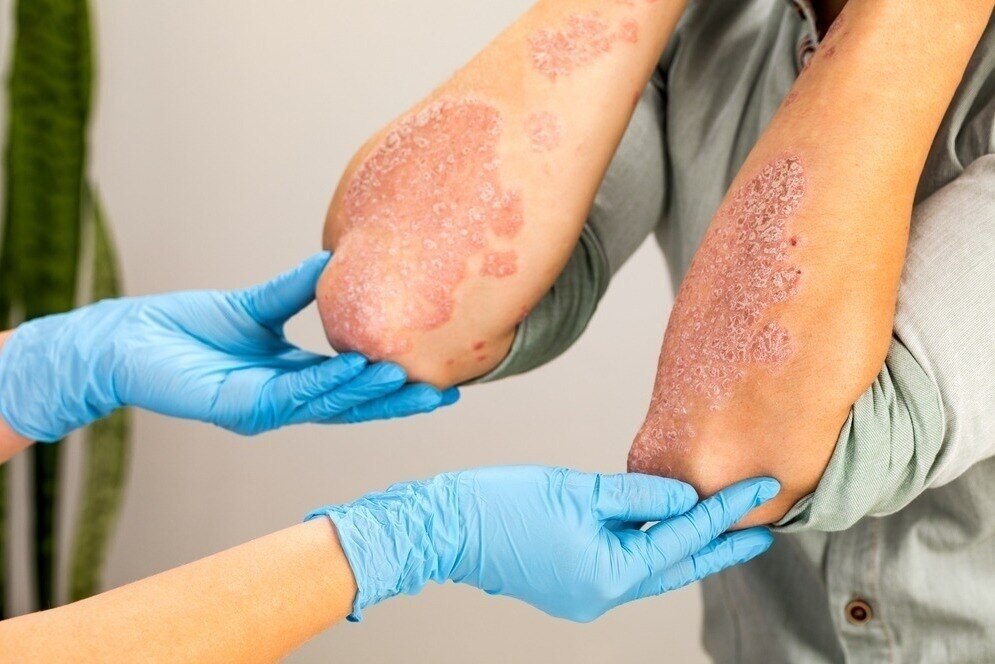
A first appointment for a scaly or itchy rash should do more than confirm that the skin looks inflamed: it should check whether the condition is psoriasis, identify joint or infection risks, and record a baseline for comparison. You will know what to bring, what the clinician should examine, how follow-up decisions are made, and when dermatology care is necessary.
Key takeaways
- Confirm the appointment format, duration, fee, and diagnostic process before travelling.
- Bring medication details, symptom photos, previous reports, and your psoriasis treatment history.
- Expect questions about rash pattern, itching, triggers, skin care, and overall health.
- Seek dermatology care promptly for infection signs, widespread rash, or joint pain.
Before the First Appointment: What to Book and Bring
Confirm the appointment method before you travel. Ask whether booking is by phone or online, whether the visit is in person or remote, how long it lasts, what the consultation fee includes, and what happens if the clinician cannot confirm psoriasis.
If you searched psoriasis homeopathy consultation bhiwandi, use the booking call to ask how suspected psoriasis is assessed. Diagnosis usually relies on your history and skin examination; no routine blood test proves psoriasis, and an uncertain case may need a dermatologist or skin biopsy.
- Write down when the rash began, where it started, how it has changed, and whether itching, pain, cracking, bleeding, or scaling occurs.
- List every affected area, including your scalp, nails, palms, soles, and joints. Record morning stiffness, swollen fingers or toes, or heel pain.
- Bring photographs showing earlier flares, especially if treatment has changed the appearance before the appointment.
- Carry medicine names and doses, creams, supplements, allergy details, previous diagnoses, test reports, and information about infections or other health conditions.
- Ask how referrals and follow-up work if the rash resembles eczema, ringworm, scabies, or another condition.
Do not stop prescribed psoriasis treatment to begin homeopathy. Reliable evidence has not shown homeopathy to treat psoriasis, and delaying effective care can allow flares or psoriatic arthritis to progress. Confirm that any proposed change will be discussed with your prescribing clinician.
The Consultation: History, Symptoms and Rash Identification
A psoriasis assessment starts by checking whether the rash is psoriasis at all. The clinician relies on your history and a skin examination; no routine blood test proves psoriasis. If the appearance remains unclear, a dermatologist may recommend a skin biopsy.
A skin disorder homeopathy doctor in Bhiwandi should ask:
- When did the rash begin, and did it spread suddenly or gradually?
- Which areas are affected, including the scalp, nails, palms, soles, elbows, knees, or skin folds?
- Does it itch, burn, crack, bleed, or hurt?
- Have you noticed pits, ridges, separation, or thickening in your nails?
- Do you have joint pain, swelling, or stiffness, especially in the morning? Has an entire finger or toe swollen?
- Has anyone in your family had psoriasis, eczema, asthma, or similar skin problems?
- Did a new medicine, infection, injury, stress, or weather change precede the flare?
- What treatments, medicines, supplements, and creams have you used, and what happened afterward?
- Do you have allergies, diabetes, obesity, high blood pressure, or other health conditions?
The examination compares plaque edges, scale, distribution, and signs of infection with patterns seen in ringworm, eczema, seborrhoeic dermatitis, allergic contact dermatitis, and scabies. A ring-shaped border, greasy scalp scale, burrows, or a sharply localised exposure rash points toward different care.
Persistent joint symptoms need medical assessment. Do not stop prescribed psoriasis treatment to start homeopathy; discuss any change with the prescribing clinician. Homeopathy has no reliable evidence as a psoriasis treatment and should not replace dermatology care.
The Examination and Baseline Record
A clinician should confirm that the rash resembles psoriasis before recording a treatment baseline. Diagnosis usually comes from your history and skin examination; no routine blood test proves psoriasis. If the appearance is unclear, the clinician should discuss dermatology referral and, when appropriate, a skin biopsy rather than label every scaly patch psoriasis.
The examination record should cover:
- Plaques: location, number, size, thickness, redness, scale, cracking, bleeding and tenderness.
- Distribution: scalp, hairline, ears, elbows, knees, trunk, skin folds, palms, soles and genital skin.
- Nails: pitting, separation from the nail bed, thickening, ridges or yellow-brown discolouration.
- Symptoms: itch, pain, burning, bleeding and the effect on sleep or daily activities.
- Joints: morning stiffness, swollen fingers or toes, heel pain and pain that improves with movement; these details can point to psoriatic arthritis.
- Infection signs: increasing warmth, pus, spreading redness, fever or sudden worsening.
- Baseline evidence: dated photographs, affected body-surface areas, a symptom rating and any current creams, medicines or supplements.
Ask how progress will be compared with this record. During psoriasis care at a homeopathic clinic in Bhiwandi, a clear baseline helps show whether the skin is improving, unchanged or worsening; it does not prove that the underlying inflammatory disease or joint risk has disappeared.
After Assessment: The Treatment Plan and Review Process
After assessment, you should leave with a written plan, not a fixed course of doses. It should state the working diagnosis, treatment goal, products or medicines, how to use them, expected response, possible side effects, and the date of review.
If the diagnosis is uncertain, ask whether a dermatologist’s opinion or skin biopsy is needed; no routine blood test proves psoriasis.
1. Confirm what the plan is targeting: limited plaques, scalp, nails, palms, soles, genital skin, itching, pain, or loss of sleep and daily function.
2. Ask how improvement will be measured. The clinician can compare photographs, affected body-surface area, scaling, redness, thickness, itch, and quality-of-life impact at each review.
3. Clarify the next step if the first plan fails. Established options include emollients, topical corticosteroids, vitamin-D analogues, phototherapy, and systemic or biologic medicines when disease is extensive, severe, or disabling.
4. Set the review date before leaving. Treatment response, adherence, side effects, and rash extent can change, so the plan should be adjusted rather than continued automatically.
5. Report persistent joint pain, swelling, morning stiffness, or a whole swollen finger or toe promptly; these symptoms need medical assessment for psoriatic arthritis.
A clear psoriasis treatment process bhiwandi should also record who to contact if the rash spreads or develops infection. At Dr. Waphekar's Homeopathic Clinic, ask how suspected psoriasis is confirmed, how referrals are handled, and how any proposed homeopathic treatment fits alongside prescribed care. Do not stop effective prescribed treatment without speaking to its prescriber.
Safety Checks: When Homeopathy Is Not Enough
A search for psoriasis care at homeopathic clinic Bhiwandi should not replace an evidence-based dermatology assessment. The NHS reports no good-quality evidence that homeopathy treats any health condition effectively. Moisturiser, short lukewarm baths, gentle cleansing and avoiding scratches can ease irritation, but they do not control inflammation or prevent psoriatic arthritis.
| Option | What it means | When it applies |
|---|---|---|
| Established dermatology care | Diagnosis, prescribed topical treatment and escalation to phototherapy or systemic medicine when needed | Use when plaques persist, spread, affect sleep or daily activities, or involve nails, scalp, palms or soles |
| Homeopathic support | A complementary consultation with no reliable evidence of disease-modifying benefit | Consider it only if it does not delay diagnosis, proven treatment or referral |
| Skin self-care | Fragrance-free moisturiser and gentle bathing reduce dryness and cracking | Useful alongside—not instead of—medical care |
A skin disorder homeopathy doctor Bhiwandi should confirm the diagnosis rather than promise a permanent cure. Psoriasis can relapse, and a clearer rash does not prove that inflammation or joint risk has gone. Tell the clinician about every medicine, supplement and topical product; “natural” and highly diluted do not guarantee safety.
Seek urgent medical assessment for rapidly spreading redness, severe pain, widespread peeling, pus-filled spots, fever, chills, or feeling acutely unwell. Arrange prompt assessment for persistent joint pain, swelling, morning stiffness, or a whole swollen finger or toe, because these signs can indicate psoriatic arthritis. Painful red eyes or vision changes also need same-day care.
Frequently asked questions
What should you bring to a psoriasis homeopathy consultation in Bhiwandi?
Bring your current medicines, previous prescriptions and test reports, allergy details, symptom timelines, and clear photographs showing changes in the rash.
What happens during a psoriasis consultation?
The clinician reviews your medical and skin history, asks about symptoms and triggers, examines the rash, and records a baseline before discussing next steps.
How is psoriasis identified during the appointment?
The clinician considers the rash location, scale, colour, borders, nail changes, symptoms, and health history. If the diagnosis is uncertain, ask what further assessment is needed.
What does the psoriasis treatment process include after assessment?
You should receive an explanation of the proposed plan, how to use each treatment, what changes to track, possible follow-up timing, and when to report worsening symptoms.
When is homeopathy not enough for psoriasis?
Seek medical dermatology care for rapidly spreading or infected-looking skin, severe pain, fever, extensive peeling, eye involvement, or new joint swelling and stiffness.