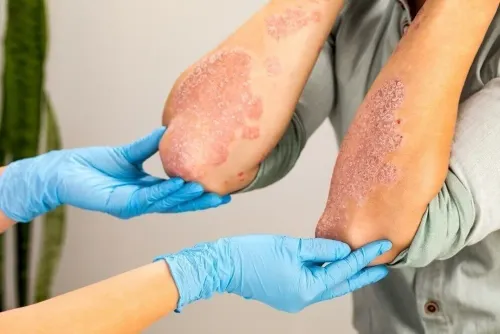

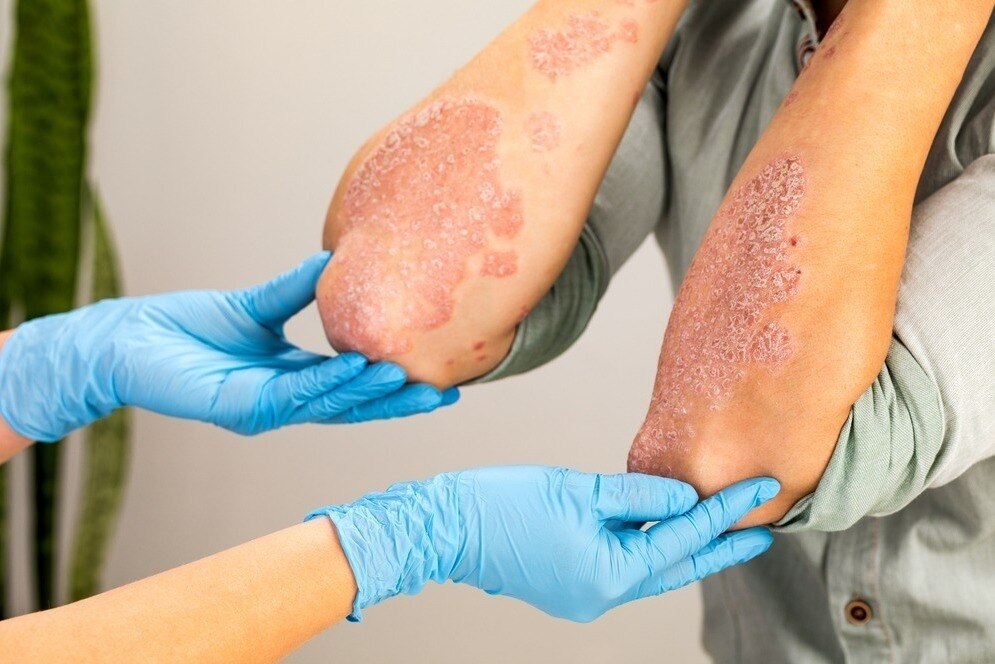
A scaly or itchy rash is not automatically psoriasis: ringworm, eczema, seborrheic dermatitis, and allergic reactions need different treatment. By comparing the visible patterns, checking warning signs, preparing for a proper consultation, and setting measurable follow-up goals, you can choose safer psoriasis care in Bhiwandi.
Key takeaways
- Get a diagnosis before treating recurring scaly patches as psoriasis.
- Seek prompt assessment for painful, widespread, infected, or joint-related symptoms.
- Bring your medication list, symptom timeline, photographs, and previous test reports.
- Compare homeopathy and other treatments by evidence, safety, monitoring, and treatment goals.
Is the Rash Psoriasis or Another Skin Condition?
Psoriasis is more likely when recurring, sharply defined scaly patches appear symmetrically, but appearance alone cannot confirm it. It is a chronic immune-mediated disease, not an infection, and it does not spread through touch, clothing, or shared living spaces.
| Pattern or lookalike | Clues | Why the distinction matters |
|---|---|---|
| Plaque psoriasis | Thick, raised patches on elbows, knees, trunk, or lower back | The commonest pattern; usually chronic and non-contagious |
| Scalp psoriasis | Well-defined scale extending beyond the hairline | Can resemble seborrheic dermatitis |
| Guttate psoriasis | Many small spots, sometimes after an infection | Needs assessment if it appears suddenly or widely |
| Inverse psoriasis | Smooth, bright-red soreness in armpits, groin, or other folds | Moisture and friction change treatment choices |
| Pustular psoriasis | Pus-filled lesions with redness or tenderness | Widespread lesions, fever, or weakness need prompt care |
| Nail psoriasis | Pitting, separation, thickening, or discolouration | Nail changes can accompany psoriatic arthritis |
| Ringworm | An enlarging ring with a clearer centre | It is infectious and needs antifungal treatment |
| Eczema | Intense itch with dry, cracked, or inflamed skin | Treatment differs from psoriasis |
| Seborrheic dermatitis | Greasy scale on the scalp, eyebrows, or nose sides | Targets oily areas and often needs different treatment |
| Allergic rash | Follows a new product, medicine, or exposure | Removing the trigger is central |
A clinician usually diagnoses ordinary plaque psoriasis from your history and skin and nail examination; no single blood test confirms it. A biopsy is reserved for an atypical rash or diagnostic uncertainty.
Before choosing homeopathy for psoriasis, avoid unidentified steroid-antifungal combination creams and do not stop prescribed treatment based on appearance. Reliable evidence has not shown homeopathy to replace established care. A psoriasis treatment bhiwandi consultation should confirm the diagnosis or arrange referral.
When Does a Psoriasis Rash Need Prompt Medical Assessment?
Do not wait for a routine psoriasis consultation if the rash is rapidly worsening, covers much of your body, or comes with fever, severe pain, marked weakness, extensive peeling, or blistering. These signs can indicate erythrodermic psoriasis, a potentially serious condition.
Seek urgent medical care for widespread pus-filled lesions, which can occur in generalized pustular psoriasis. Go promptly rather than waiting for an appointment.
- Eye pain, eye redness, light sensitivity, or vision changes
- Rapidly spreading redness or widespread peeling
- Fever, severe pain, or unusual weakness
- Pus-filled lesions over large areas
Joint symptoms need assessment for psoriatic arthritis, not skin treatment alone. Report joint pain or swelling, morning stiffness lasting more than 30 minutes, heel pain, or a swollen sausage-like finger or toe. Untreated joint inflammation can cause permanent damage.
Book a psoriasis consultation in Bhiwandi for persistent disease even when the rash is small. Psoriasis on the face, hands, feet, genitals, or nails can disrupt function and quality of life disproportionately; so can itching or pain that affects sleep, work, or mobility.
A clinician should assess these effects alongside the visible body-surface area and decide whether routine care, urgent review, or referral is appropriate.
What Should You Take to a Psoriasis Consultation in Bhiwandi?
Bring a written record, not just a memory, to your psoriasis consultation bhiwandi. A psoriasis skin disorder doctor bhiwandi should assess your health, treatment history, and daily impact alongside the rash.
1. Pack every current medicine and supplement, plus cream tubes, tablet strips, or boxes. Record the names and duration of steroid and antifungal use, previous diagnoses, allergies, family history, and whether you are pregnant or planning pregnancy.
2. Make a dated trigger list covering skin injury, stress, smoking, alcohol, recent infections, and new medicines. Show photographs of the flare at its worst, especially if treatment has already changed its appearance.
3. Note itching, pain, sleep disruption, work interference, and your response to earlier treatment. These details show why a small patch on the face, hands, feet, genitals, or nails can matter as much as a larger area elsewhere.
4. Expect an examination of lesion location and distribution, scale, body-surface extent, scalp, nails, palms, soles, and genital skin when relevant. The doctor should check for infection and ask about joint pain, swelling, morning stiffness, heel pain, or a sausage-like finger or toe.
5. A competent clinician should ask about diabetes, high blood pressure, weight, cardiovascular disease, inflammatory bowel disease, anxiety, and depression. Psoriasis is not only a visible rash, and some systemic medicines require blood tests and ongoing safety monitoring.
Ask for a written treatment, monitoring, side-effect, and worsening-symptom plan before leaving.
How Should You Compare Psoriasis Treatment Options, Including Homeopathy?
Compare the plan against disease extent, affected sites, other illnesses, pregnancy plans, previous treatment, and monitoring access. A psoriasis treatment Bhiwandi plan should explain why this option fits you, what happens if it fails, and who takes over if the disease worsens.
| Option | Main role | Limits or questions |
|---|---|---|
| Moisturiser | Reduces dryness, scale, and cracking | Does not control every case; ask which fragrance-free product and how often to apply |
| Topical steroid, vitamin-D analogue, retinoid, or calcineurin inhibitor | Treats local plaques or sensitive sites | Confirm strength, body site, frequency, duration, and irritation or thinning risks |
| Phototherapy | Treats more widespread disease under measured exposure | Ask about sessions, burns, eye protection, and travel commitment |
| Systemic or biologic medicine | Treats extensive, resistant, or high-impact psoriasis | Ask about blood tests, infections, interactions, pregnancy, and ongoing monitoring |
Ask for these answers in writing:
- What improvement should appear, and by when?
- What clinical evidence supports this medicine or procedure?
- Which medicines, supplements, pregnancy plans, or illnesses change the choice?
- What side effects require stopping treatment or calling the clinic?
- How often is follow-up, and what should you do during a flare?
- When must you see a dermatologist or go to hospital?
Reliable clinical evidence does not show homeopathy for psoriasis can replace established treatment. If you consult a skin disorder homeopathy doctor Bhiwandi, including Dr. Waphekar's Homeopathic Clinic, request ingredients, doses, evidence, a measurement plan, and a written referral and safety pathway. Guaranteed cures or advice to stop prescribed medicines are warning signs.
What Should Improvement Look Like After the First Consultation?
Improvement has three separate targets, and less itching alone does not prove that psoriasis is controlled.
| Goal | What progress looks like | What to check |
|---|---|---|
| Symptom relief | Less itch, pain, scaling, and cracking | Sleep, movement, and daily comfort |
| Flare control | No new lesions, with existing plaques becoming thinner and less inflamed | Spread, redness, scale, and affected sites |
| Long-term management | Fewer flares through prevention, monitoring, and treatment changes | Triggers, adherence, side effects, nails, scalp, and joints |
Use the agreed plan every day:
- Apply a fragrance-free moisturiser regularly, bathe with lukewarm rather than hot water, and pat skin dry.
- Avoid scratching or picking; cover and protect injured skin from friction and infection.
- Track triggers such as stress, skin injury, smoking, heavy alcohol use, infections, and new medicines.
- Apply prescribed topical treatment exactly as directed. Do not stop topical or systemic medicines suddenly without medical advice, because a flare can follow.
Tanning or deliberately causing sunburn is not phototherapy. Supervised phototherapy uses measured exposure, a planned course, and burn management; ask who provides it and how exposure is recorded.
At review, the clinician should compare dated photographs, lesion thickness and scale, affected sites, body-surface extent, nail and scalp changes, sleep and work impact, joint symptoms, side effects, and adherence. Psoriasis treatment bhiwandi and psoriasis consultation bhiwandi searches should lead to a written duration, monitoring, and worsening plan.
The plan is failing if lesions spread, sleep or function remains impaired, joint symptoms appear, side effects develop, or no progress occurs by the promised review point.
Frequently asked questions
How can you tell psoriasis from another skin condition?
Recurring, sharply defined, scaly patches on both sides of the body suggest psoriasis, but a doctor must assess the rash and consider eczema, fungal infection, seborrhoeic dermatitis, and other conditions.
When does psoriasis need prompt medical assessment?
Arrange prompt assessment when the rash is widespread, rapidly worsening, painful, associated with fever, draining fluid, or accompanied by swollen, stiff, or painful joints.
What should you take to a psoriasis consultation in Bhiwandi?
Take a list of medicines and supplements, previous reports, allergy details, symptom dates, possible triggers, and clear photographs showing how the rash has changed.
How should you compare homeopathy with other psoriasis treatments?
Ask what evidence supports each option, how risks and interactions will be monitored, when improvement should be reviewed, and whether it replaces or complements proven medical care.
What should improvement look like after the first consultation?
You should leave with a working diagnosis or next-step plan, clear instructions, safety warnings, a review timeline, and measurable signs such as reduced scaling, redness, itch, or flare frequency.