
Psoriasis is an immune-mediated disease that can resemble infections, eczema and other skin conditions, so the first useful step is confirming the diagnosis and its severity. You will be able to judge what a homeopathy clinic can realistically contribute, when evidence-based dermatology is necessary, and which warning signs require urgent medical care.
Key takeaways
- Psoriasis is not contagious, but a correct diagnosis guides safe treatment.
- Seek urgent care for widespread redness, pus-filled bumps, fever or severe joint pain.
- Established psoriasis treatments have stronger evidence than homeopathy for controlling symptoms.
- Ask the clinic about diagnosis, treatment evidence, medicines and when specialist referral is needed.
What psoriasis is, and why the diagnosis matters
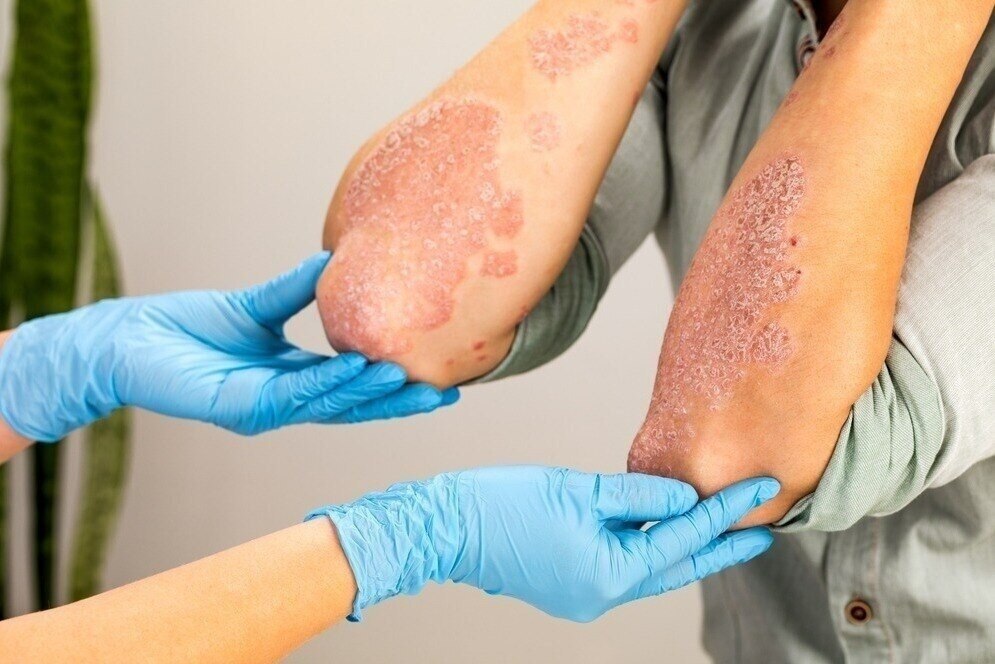
Psoriasis is a chronic, immune-mediated inflammatory disease: the immune system speeds up skin-cell turnover, causing inflammation and visible lesions. It is not contagious and cannot spread through touch, shared clothing or sexual contact.
Its appearance changes by skin tone and body site, so diagnosis matters before discussing homeopathy for psoriasis. A psoriasis homeopathy clinic for chronic skin problems in bhiwandi should confirm the condition rather than assume every long-lasting rash is psoriasis.
| Form | Typical appearance |
|---|---|
| Plaque | Clearly defined, thickened areas with scale |
| Guttate | Many small spots, often after an infection |
| Inverse | Smooth, inflamed patches in skin folds |
| Pustular | Pus-filled lesions |
| Erythrodermic | Widespread redness and peeling, often with systemic illness |
Body-surface area alone does not measure severity. A small patch on the scalp, nails, face, palms, soles or genital skin can disrupt work, movement, sleep, relationships or emotional wellbeing. Nail disease can affect hand function, while lesions on the soles can make walking painful.
Psoriasis can resemble eczema, ringworm, seborrhoeic dermatitis or contact dermatitis. A clinician may need to examine the skin, scalp and nails, and arrange fungal testing or a biopsy when the diagnosis is uncertain. Rapidly spreading redness, severe pain, fever, chills, dehydration, pus-filled lesions or feeling acutely unwell requires urgent medical assessment.
How to tell psoriasis from similar skin conditions—and when to act urgently
An expanding ring with a sharper, more active edge points toward ringworm, especially when it remains limited to one area. Eczema more often brings itch and irritation in patterns associated with sensitive skin, while contact dermatitis follows exposure to a new soap, adhesive, cosmetic, plant or chemical.
Use these clues to decide what to discuss with a clinician, not to diagnose yourself:
- Seborrhoeic dermatitis commonly affects the scalp, eyebrows, sides of the nose and chest, producing greasy scale.
- Scabies causes intense night-time itching and can involve household contacts, the finger webs and wrists.
- Psoriasis often produces clearly defined scale, but it can overlap with fungal infection, eczema or seborrhoeic dermatitis and can look different on the scalp, nails and different skin tones.
- A dermatologist or physician may examine the skin, scalp and nails. Diagnosis is usually clinical; a skin scraping, fungal test or biopsy may be considered when the appearance is uncertain.
Do not wait for a routine appointment if redness spreads rapidly, pain is severe, fever or chills develop, you become dehydrated or acutely unwell, or lesions contain pus. Eye involvement needs prompt conventional medical care.
Generalised pustular psoriasis and possible erythrodermic psoriasis, with widespread redness, peeling or systemic illness, require urgent assessment rather than a clinic visit. A skin disorder homeopathy doctor in Bhiwandi should support referral when these warning signs appear, not delay it.
What the evidence says about homeopathy versus established psoriasis treatments
High-quality, condition-specific evidence has not established homeopathy for psoriasis as a treatment that clears lesions or changes the disease’s underlying course. Psoriasis naturally improves and worsens, so one person’s uncontrolled experience cannot show that a remedy caused improvement.
A clinic may provide discussion, symptom tracking, moisturising advice or referral, but these supportive services do not prove disease control.
| Option | What the evidence and treatment involve | When it applies |
|---|---|---|
| Homeopathy | No good-quality evidence shows that remedies clear psoriasis or alter its course | Do not use it instead of effective care |
| Topical treatment | Corticosteroids, vitamin D analogues, calcineurin inhibitors and emollients | Common first-line care, chosen for severity and body site |
| Narrowband UV-B | Controlled ultraviolet-B phototherapy | Widespread disease unsuitable for creams or inadequately controlled with them |
| Oral medicines | Conventional systemic medicines that modify immune activity | Extensive, persistent or quality-of-life-limiting psoriasis |
| Biologic treatments | Targeted medicines for immune pathways | Moderate-to-severe disease under specialist supervision |
Corticosteroids can help, but the prescriber must select the strength, duration and application site. Prolonged or inappropriate use can thin skin, especially on the face, folds and genital skin. A product labelled homeopathic is not automatically safe: measurable ingredients, incorrect dilution, contamination and drug interactions remain possible, and delayed effective treatment can cause harm.
Never stop prescribed treatment or replace it with an unlabelled product without medical advice. A search for psoriasis treatment bhiwandi should therefore compare diagnosis, monitoring and referral—not assume homeopathy is a cure.
What to expect from a responsible clinic consultation in Bhiwandi
A responsible consultation starts with a timeline: when symptoms began, previous diagnoses, infections, treatments, and every medicine change. The practitioner should inspect affected skin, scalp and nails, ask about joint symptoms, sleep, work, mood and daily functioning, then record baseline severity and photographs when appropriate.
Before choosing a psoriasis homeopathy clinic for chronic skin problems in Bhiwandi, ask:
- Who will make the diagnosis, and what qualifications do they hold?
- Can they arrange a dermatology review if the rash is uncertain or worsening?
- Where will they refer you for fungal testing, biopsy, narrowband UVB phototherapy or systemic treatment?
- Will they check every prescription, over-the-counter medicine and supplement?
- What is known, unknown or unproven about the proposed remedy?
- What are the consultation and follow-up fees, and when is the next review?
| Question | Why it matters | A responsible answer |
|---|---|---|
| Diagnosis | Psoriasis can resemble fungal infection, eczema or dermatitis | The clinician explains the diagnosis and its limits |
| Monitoring | Natural flares can look like treatment success | Written severity notes, photographs and a dated review plan |
| Safety | Delay can worsen extensive or resistant disease | Clear escalation and referral instructions |
Dr. Waphekar's Homeopathic Clinic should meet the same standard as any psoriasis treatment Bhiwandi service or skin disorder homeopathy doctor in Bhiwandi. Its practical benefit is strongest when it supports monitoring, moisturising advice and timely referral, not when it presents homeopathy as a substitute for care psoriasis severity requires.
Ask for a written treatment record and instructions for worsening disease, including mood or suicidal thoughts.
Related product
 | Homeopathy doctor in bhiwandi Skin irregularities that are typically symptoms of a skin disorder include raised bumps that are red or white. View product → |
Which triggers and associated symptoms need a separate medical review
Homeopathy for psoriasis is not an established cure. A clinic may help with discussion, symptom tracking and referral, but it cannot be expected to remove triggers such as skin injury, infection, stress, smoking, alcohol use or obesity.
| Trigger or warning sign | Appropriate response |
|---|---|
| Skin injury or suspected infection | Protect the area; seek medical review for spreading redness, warmth, pus, pain or fever. |
| New or stopped medicine | Ask the prescribing doctor to review the change; do not stop treatment alone. |
| Stress, smoking, alcohol or obesity | Use counselling, cessation support, addiction care, nutrition advice or mental-health support alongside psoriasis care. |
| Extensive, rapidly worsening or treatment-resistant disease | Choose dermatology or urgent medical care before a complementary consultation. |
| Eye symptoms or feeling systemically unwell | Seek urgent medical assessment. |
New or persistent joint pain, swelling, morning stiffness, or sausage-like fingers or toes needs prompt assessment. Psoriatic arthritis can permanently damage joints when treatment is delayed, so skin-only care is not enough.
Ask about depression, anxiety, stigma, poor sleep and suicidal thoughts. Immediate suicide risk requires urgent mental-health help or emergency services; a remedy must not replace that care.
If you search for psoriasis treatment bhiwandi, use this decision rule: consider a Bhiwandi clinic for discussion, tracking and referral only after diagnosis, medicine checks and safety screening. Supportive benefit is possible, but no established homeopathic disease cure exists.
Frequently asked questions
What is psoriasis, and is it contagious?
Psoriasis is a chronic immune-mediated inflammatory disease that speeds up skin-cell turnover and causes inflamed, scaly lesions. It is not contagious and does not spread through touch, shared clothing or sexual contact.
How can psoriasis be distinguished from similar skin conditions?
Psoriasis often produces well-defined plaques with silvery scale, but eczema, seborrhoeic dermatitis, fungal infections and contact dermatitis can look similar. A clinician may need to examine the distribution, scale, nails and medical history before confirming the diagnosis.
Is homeopathy proven to treat psoriasis?
Established psoriasis treatments have stronger clinical evidence than homeopathy. Do not stop prescribed treatment or delay assessment because of a homeopathic consultation.
What should you expect from a responsible psoriasis clinic consultation in Bhiwandi?
Expect questions about symptom duration, triggers, medicines, family history, joint symptoms and previous treatments, followed by a skin examination. Ask how the diagnosis was reached, what evidence supports each treatment, how progress will be measured and when referral to a dermatologist is needed.