

An “incurable disease” may mean a condition that cannot currently be eliminated, a condition requiring lifelong management, or symptoms that have not improved after previous treatment. You will be able to distinguish supportive homeopathic care from disease-modifying treatment, identify urgent safety boundaries, and assess whether a clinic’s consultation and referral process is responsible.
Key takeaways
- Incurable does not mean untreatable; control symptoms and preserve daily function.
- Never stop insulin, steroids, seizure medicines, or other prescribed treatment without medical advice.
- Choose a clinic that reviews diagnoses, medicines, warning signs, and follow-up plans.
- Use rehabilitation, psychotherapy, or palliative care when those services address your needs better.
What “incurable disease” means—and what supportive care can realistically do
Incurable means that medicine cannot currently eliminate the underlying disease. It does not mean that treatment is pointless: many incurable diseases can be controlled with lifelong medicines, rehabilitation, symptom management, or palliative care.
A symptom that has not improved is not proof that the disease is incurable. Confirm the diagnosis, review previous treatment, and ask whether another explanation or treatment remains available.
| Condition | Disease-modifying treatment | Possible supportive role |
|---|---|---|
| Cancer | Oncology treatment, surgery, radiation, or targeted medicines | Support for comfort and communication, never a replacement for oncology care |
| Diabetes | Insulin or other prescribed glucose-lowering treatment | Help with symptom tracking and treatment adherence |
| Epilepsy | Anti-seizure medicines and neurological review | Record triggers and seizures; do not replace prescribed medicine |
| Advanced illness | Specialist treatment and palliative care | Attention to pain, breathlessness, nausea, distress, and family needs |
Homeopathy can reasonably serve only as complementary support around an established medical plan. Evidence does not show that homeopathic remedies cure serious disease, reverse organ damage, or replace insulin, inhalers, cancer treatment, antiretrovirals, or psychiatric care. Any chronic disease homeopathic care should review your diagnosis, medicines, allergies, goals, baseline symptoms, and follow-up date.
Searching for “incurable diseases homeopathy” does not justify delaying care. Seek urgent medical help for:
- Severe breathing difficulty or chest pain
- New weakness, confusion, or uncontrolled bleeding
- Rapidly worsening infection
- Thoughts of suicide
Match the illness to the right treatment and protect essential medicines
A homeopathy clinic for chronic illness can support conversations about symptoms, sleep, stress, coping, and day-to-day comfort alongside established medical care. It must begin with a confirmed diagnosis, review your reports, medicines and allergies, record baseline symptoms, and set a review date. Do not treat an unproven remedy as disease-modifying therapy.
| Condition | Supportive role | Treatment or service not to replace |
|---|---|---|
| Asthma | Discuss comfort, sleep, and anxiety alongside medical care | Prescribed inhaled corticosteroids, reliever inhalers, and urgent care for breathing difficulty |
| Diabetes | Support wellbeing and symptom tracking | Insulin, blood-glucose monitoring, dietetic care, and diabetes reviews |
| Cancer | Support coping and comfort alongside oncology care | Chemotherapy, radiotherapy, surgery, immunotherapy, or oncology advice |
| Epilepsy | Discuss sleep, stress, and treatment concerns | Antiseizure medicines and neurologist supervision |
| Thyroid disease | Support symptom records and general wellbeing | Levothyroxine, antithyroid medicines, blood tests, or endocrinology care |
| Schizophrenia or severe depression | Offer supportive listening only alongside mental-health care | Antipsychotic or antidepressant treatment, psychotherapy, crisis services, or psychiatric review |
Never stop insulin, antiseizure medicine, inhaled corticosteroids, cancer treatment, psychiatric medicine, or thyroid medicine because a remedy was suggested. Palliative care remains essential for advanced illness: its team can treat pain, breathlessness, nausea, psychological distress, and practical or family needs.
Ask for the practitioner’s legally recognised registration, the remedy’s ingredients, fees, follow-up plan, and referral policy. Seek urgent medical care for severe breathing difficulty, chest pain, seizures, confusion, suicidal thoughts, or rapidly worsening symptoms.
A safe consultation pathway for long-term illness
A safe appointment begins by protecting the diagnosis and treatment already keeping the illness stable. Chronic disease homeopathic care is unsafe if it delays insulin, anti-seizure medicine, inhalers, cancer treatment, antiretrovirals, psychiatric care, or other prescribed management.
1. Before the visit, collect the conventional diagnosis, discharge summaries, test reports, allergy history, and a complete list of medicines, doses, and supplements. Write down symptom changes, treatment goals, and warning signs. Check the practitioner’s legally recognised registration, fees, proposed remedy ingredients, follow-up schedule, and referral policy.
Do not book routine complementary care for severe breathing difficulty, chest pain, new weakness or confusion, uncontrolled bleeding, rapidly worsening infection, or suicidal thoughts; seek urgent medical help.
2. During the consultation, the practitioner should ask about onset, pattern, sleep, function, mental health, previous treatment, and medicine effects, then record baseline symptoms. Ask what the remedy is intended to support, what it cannot treat, and whether your physician will remain involved.
A homeopathic clinic for chronic illness must not tell you to stop proven treatment or claim to reverse an incurable disease.
3. Afterward, keep a dated symptom and medicine log rather than judging change from memory. Set a specific review date and measurable goals, such as fewer night symptoms or better daily function. Report deterioration promptly; seek physician review when symptoms change, tests worsen, side effects appear, or the promised follow-up is missed.
When standard management, rehabilitation, psychotherapy, or palliative care fits better
Choose established care when it controls disease, prevents disability, relieves distress, or protects life; use homeopathic support only as an add-on that does not delay it.
| Option | What it does | When it fits |
|---|---|---|
| Standard management | Uses disease-modifying medicines, monitoring, procedures, and symptom treatment | Diabetes, epilepsy, asthma, heart disease, cancer, HIV, thyroid disease, and other conditions needing ongoing medical supervision |
| Rehabilitation | Builds strength, mobility, communication, independence, or daily-function skills | After stroke, injury, surgery, neurological disease, or loss of physical function |
| Psychotherapy | Treats anxiety, depression, trauma, suicidal thoughts, coping difficulties, and harmful behaviour patterns | Mental-health symptoms that need structured psychological treatment; severe depression or schizophrenia also require medical assessment |
| Palliative care | Relieves pain, breathlessness, nausea, psychological distress, and social strain while supporting quality of life | Advanced illness, alongside standard treatment or during end-of-life care |
| Homeopathic support | Offers complementary consultations, but does not cure disease or replace proven treatment | Only after diagnosis, medicine review, clear goals, and agreement with the treating clinician |
For incurable diseases homeopathy, the key comparison is safety and purpose, not which label sounds more natural. A homeopathic remedy must not replace insulin, anti-seizure medicine, inhalers, cancer treatment, antiretroviral therapy, psychiatric care, or emergency assessment.
Seek urgent medical help instead of booking routine complementary care for:
- Severe breathing difficulty, chest pain, new weakness, confusion, or uncontrolled bleeding
- Rapidly worsening infection or dehydration
- Thoughts of suicide or immediate danger to yourself or another person
How to assess a homeopathic clinic for chronic illness in Bhiwandi
Before booking, verify the practitioner’s legally recognised registration. Check the registration number in the National Register of Homoeopathy or the relevant Maharashtra register, and confirm who will review your case. A responsible homeopathic clinic for incurable diseases in Bhiwandi will not promise a cure or advise stopping prescribed treatment.
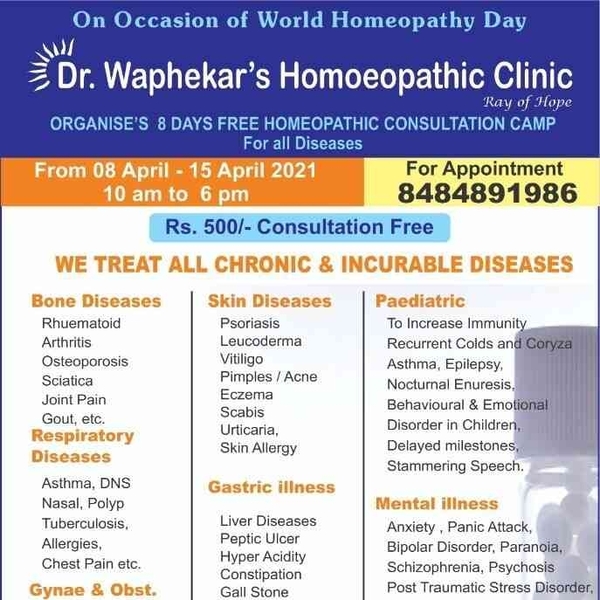
Dr. Waphekar's Homeopathic Clinic should be assessed by the same practical standards as any homeopathic clinic in Bhiwandi: ask for evidence, a written plan, and clear limits.
Ask these questions before paying:
- Have you reviewed my diagnosis, reports, medicines, allergies, and treatment goals?
- What are the remedy’s ingredients, preparation, dose, and total fees?
- What symptoms will we track, and when is the next review?
- Will you coordinate with my physician or refer me if my condition worsens?
- What do you do for chest pain, severe breathing difficulty, new confusion or weakness, uncontrolled bleeding, rapidly worsening infection, or suicidal thoughts?
| Check | Responsible clinic | Warning sign |
|---|---|---|
| Registration | Provides a verifiable registration number | Avoids registration questions |
| Treatment role | Describes supportive care | Promises to cure cancer, diabetes, or schizophrenia |
| Medicine safety | Reviews prescriptions and says not to stop them | Recommends replacing essential treatment |
| Follow-up | Sets a review date and tracks baseline symptoms | Sells indefinite treatment without reassessment |
| Referral | Sends urgent cases to appropriate medical care | Treats red flags as routine complaints |
Frequently asked questions
What does “incurable disease” mean?
It means medicine cannot currently eliminate the underlying disease. Treatment can still control symptoms, prevent complications, support function, or improve comfort.
Can homeopathy replace essential medicines for an incurable disease?
No. Do not stop insulin, steroids, seizure medicines, anticoagulants, cancer treatment, or other prescribed medicines to use homeopathy.
What should happen during a safe chronic-illness consultation?
The clinician should review your diagnosis, symptoms, reports, current medicines, allergies, red-flag symptoms, treatment goals, and follow-up plan.
When is palliative care or rehabilitation a better fit?
Palliative care fits serious illness requiring comfort and symptom support. Rehabilitation fits problems involving mobility, strength, speech, activities, or daily function.
How can you assess a homeopathic clinic for chronic illness in Bhiwandi?
Check whether the clinic takes a full history, requests relevant reports, explains limits, protects prescribed treatment, identifies emergencies, and arranges follow-up.