

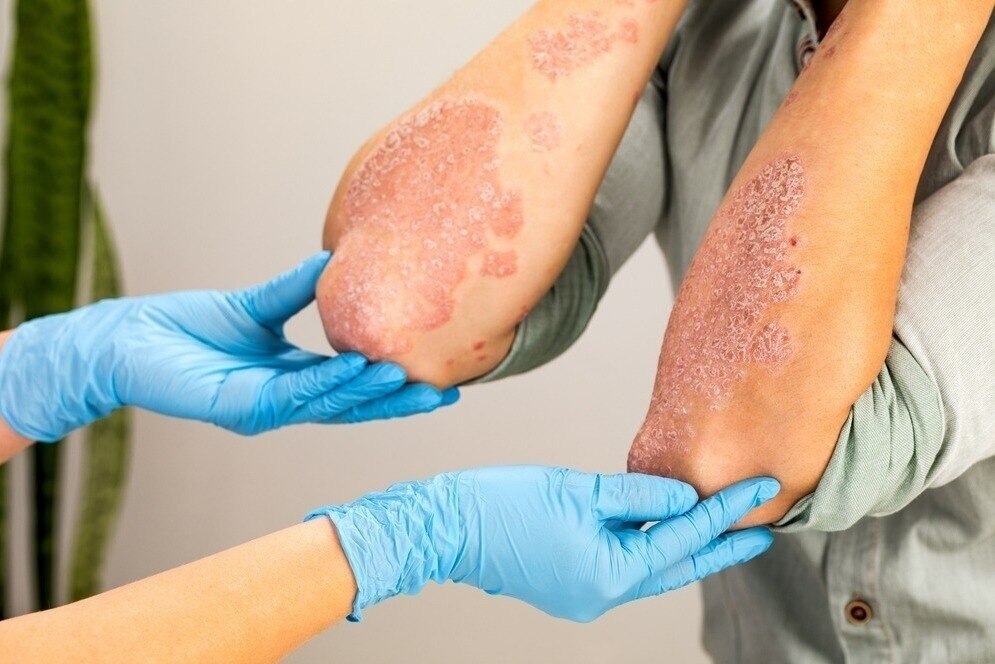
Choosing care starts with confirming that the rash is psoriasis, identifying its pattern and checking whether it affects joints, nails, the scalp or sensitive skin sites. You will be able to compare homeopathic consultations, dermatology treatment, phototherapy and systemic medicines by safety, evidence, effort and the features of your condition.
Key takeaways
- Seek prompt medical care for painful, widespread or infected-looking plaques.
- Match treatment intensity to affected body areas and daily disruption.
- Ask for a diagnosis, medication review and clear monitoring plan.
- Use homeopathy as supportive care, not a replacement for proven psoriasis treatment.
Start by identifying the psoriasis pattern and any warning signs
Psoriasis is not contagious, but its pattern determines the next step. Stable, well-defined plaques with silvery scale on the elbows, knees, scalp or lower back often fit routine assessment.
Smooth red patches in skin folds, scattered drop-shaped spots after an infection, nail pitting, or persistent scalp disease still need diagnosis because eczema, ringworm, seborrhoeic dermatitis, contact allergy and scabies can look similar.
Seek urgent medical attention if you develop:
- Redness spreading rapidly across most of your body
- Widespread pus-filled bumps or pustules
- Fever, chills, severe weakness or feeling acutely unwell
- Dizziness, confusion, dehydration, or difficulty drinking
- Painful, swollen joints with marked stiffness, especially if movement becomes difficult
Do not treat extensive redness or pustules as a routine flare with moisturiser alone. A psoriasis care option in Bhiwandi should begin with a clinician checking the skin, nails and joints, reviewing medicines already tried, and asking about recent infections.
Mention sleep loss, low mood, anxiety, smoking, alcohol use and weight concerns; psoriasis can affect more than the skin. Cracked or bleeding plaques, severe itch, or symptoms disrupting work and sleep also justify prompt review. Take photographs of changing rashes and a list of every cream, tablet and supplement you use.
Match treatment intensity to location, symptoms and daily impact
A small patch on the elbow does not call for the same plan as painful plaques on your feet, scalp, genitals or hands. Match the option to location, itch or pain, nail changes, joint symptoms, daily disruption and what previous treatment actually achieved.
| Option | What it means | When it fits |
|---|---|---|
| Topical prescription treatment | Creams, ointments or scalp preparations applied directly | Limited plaques, with the medicine adjusted for thin skin on the face, folds or genitals |
| Dermatologist assessment | Diagnosis, examination and a treatment plan that can be escalated | Unclear rashes, nail or scalp involvement, widespread disease, failed treatment or suspected infection |
| Phototherapy | Supervised ultraviolet treatment over repeated sessions | More extensive disease when topical treatment is inadequate and regular clinic visits are practical |
| Systemic medicine | Tablets or injections affecting immune inflammation throughout the body | Severe disease, major quality-of-life impact, joint symptoms or inadequate response to topical care |
| Homeopathy consultation | A discussion of symptoms and personal circumstances without proven psoriasis suppression | Only as complementary support, never instead of diagnosis or effective treatment |
Before choosing skin disorder treatment in Bhiwandi, disclose pregnancy, age, liver or kidney disease, current medicines, allergies, smoking, alcohol use, weight, sleep and mood. Depression, anxiety and cardiovascular risk factors affect safe planning.
A homeopathy medicine for psoriasis has no good-quality evidence for controlling psoriasis or preventing joint damage, so delaying medical care can leave active skin or joint disease untreated.
What a proper psoriasis assessment should include
A proper assessment should confirm the diagnosis, measure its impact and check for problems beyond the skin. Psoriasis can resemble ringworm, eczema, seborrhoeic dermatitis, allergic contact dermatitis or scabies, so treatment should not begin from a photograph or online recommendation alone.
1. Examine every affected area, including the scalp, nails, face, skin folds, palms, soles and genitals. Record plaques, scale, cracking, bleeding, nail pitting and the approximate body-surface area involved.
2. Ask when the changes began, whether they itch or hurt, how quickly they spread, and how they affect sleep, work, movement and confidence. Review previous creams, medicines, phototherapy, their duration, side effects and response.
3. Screen for psoriatic arthritis by asking about persistent joint pain, swelling, morning stiffness, heel pain, inflammatory back pain, or a whole swollen finger or toe. These symptoms need medical assessment because untreated joint inflammation can cause lasting damage.
4. Check age, pregnancy or pregnancy plans, allergies, other medicines, smoking, alcohol use, weight, sleep, anxiety and depression. Widespread or disabling disease may require blood tests, infection screening and specialist medicines such as methotrexate, ciclosporin, acitretin, apremilast or biologics.
A homeopathy doctor for psoriasis should explain that homeopathy medicine for psoriasis has not been proven to suppress psoriasis or prevent joint damage. At Dr. Waphekar's Homeopathic Clinic, disclose every product to your dermatologist or physician, and seek referral when the diagnosis is uncertain, joints are affected or symptoms are widespread.
Where homeopathy fits—and where it cannot replace proven care
No homeopathy medicine for psoriasis can currently be described as a proven treatment that suppresses the disease or prevents psoriatic joint damage. The NHS reports no good-quality evidence that homeopathy works for any health condition, so replacing prescribed care with it can delay diagnosis and allow skin or joint disease to worsen.
People searching for psoriasis homeopathy in Bhiwandi can use a consultation as complementary support, not as a substitute for diagnosis by a qualified dermatologist or medical practitioner.
Ask the practitioner to examine your skin and nails, review previous treatments, and refer you when the diagnosis is uncertain; fungal infection, eczema and seborrhoeic dermatitis can resemble psoriasis, and a biopsy may be needed.
Use these safeguards during any consultation:
- Show every medicine, supplement and skin product you use, including the label and dose. Some products sold as “homeopathic” contain active substances or can be unsafe.
- Do not stop a prescribed cream, phototherapy course or systemic medicine without speaking to its prescriber.
- Seek prompt medical assessment for new joint swelling or stiffness, widespread redness, pus-filled lesions, fever, or rapidly worsening symptoms.
- Treat moisturiser as comfort care: it can reduce scaling, cracking and dryness but does not control the underlying immune inflammation.
Compare the time, monitoring and follow-up each option requires
The practical difference is how often you must apply treatment, travel for appointments and complete safety checks. A psoriasis care option in Bhiwandi should fit your routine, not only the severity recorded at one visit.
| Option | Time and effort | Monitoring and follow-up |
|---|---|---|
| Topical medicines | Apply creams, ointments or lotions exactly as prescribed, often daily; wash hands and manage staining or scalp application. | Review after several weeks to assess response, irritation, skin thinning or incorrect use. |
| Narrowband UVB phototherapy | Attend a clinic two or three times weekly for a treatment course; protect your eyes and report burning promptly. | Staff adjust exposure to your skin response and stop or modify treatment after excessive redness. |
| Systemic treatment | Take tablets, injections or other prescribed medicines on schedule; appointments and travel take more planning. | Methotrexate, ciclosporin, acitretin, apremilast and biologics can require baseline blood tests, repeat tests and infection-risk screening. |
| Ongoing management | Continue moisturising, record flares and maintain treatment after improvement rather than stopping abruptly. | Keep reviews for scalp, nails, joints, mood, sleep, weight, smoking and alcohol; report joint pain or morning stiffness. |
If widespread plaques, painful cracks or poor function persist, specialist follow-up matters more than convenience. Do not start systemic medicine from an online recommendation. A homeopathy consultation cannot replace diagnosis, proven psoriasis treatment or monitoring for joint disease.
Frequently asked questions
What warning signs need prompt psoriasis assessment?
Seek prompt assessment for rapidly spreading plaques, severe pain, pus, fever, extensive skin involvement, eye symptoms or painful swollen joints.
How should psoriasis treatment intensity match the skin problem?
Limited plaques may need local treatment, while scalp, nail, genital, facial, extensive or function-limiting psoriasis requires more specialised assessment and monitoring.
What should a proper psoriasis assessment include?
The assessment should review plaque location, scale, itch, pain, nail and joint symptoms, previous treatments, medicines, triggers and the effect on daily activities.
Where can homeopathy fit in psoriasis care?
Homeopathy can be discussed as complementary support, but it cannot replace diagnosis, prescribed treatment, urgent care or monitoring for complications.
How do psoriasis care options differ in time and follow-up?
Topical care requires consistent application, phototherapy requires scheduled sessions, and systemic medicines require medical monitoring; every option needs review if symptoms change or fail to improve.